Why I’m a Ginner
Ginners have much more fun…
People often ask why I’m such a gin fanatic. Despite owning a shirt that says, “Gin, because everyone needs a hobby,” I like gin because it tells a story. Actually—stories. All plucked, crushed, and woven into the bottle. Gin wants to announce itself in every glass. Juniper from here. Citrus from there. Roots, bark, leaves, and the sort of botanicals you can’t pronounce and would only notice if you were on a survival reality show. Every bottle is a small treasure trove of geography, weather, and plants that suffered nobly for the cause.
What really hooks me is that gin feels intentional without being pretentious. A coastal gin that actually tastes like it knows the sea. A forest gin that smells like bad decisions made in good boots. The distiller matters. The actual still matters. Even the water has an opinion. Like a wine’s terroir, yes—but with less hushed reverence and more raised eyebrow. Gin doesn’t whisper where it’s from. It spins tales, sometimes all at once. That’s why I keep listening. And pouring.
When London Tried to Smell Sober
When Londoners’ love of gin went off the rails.
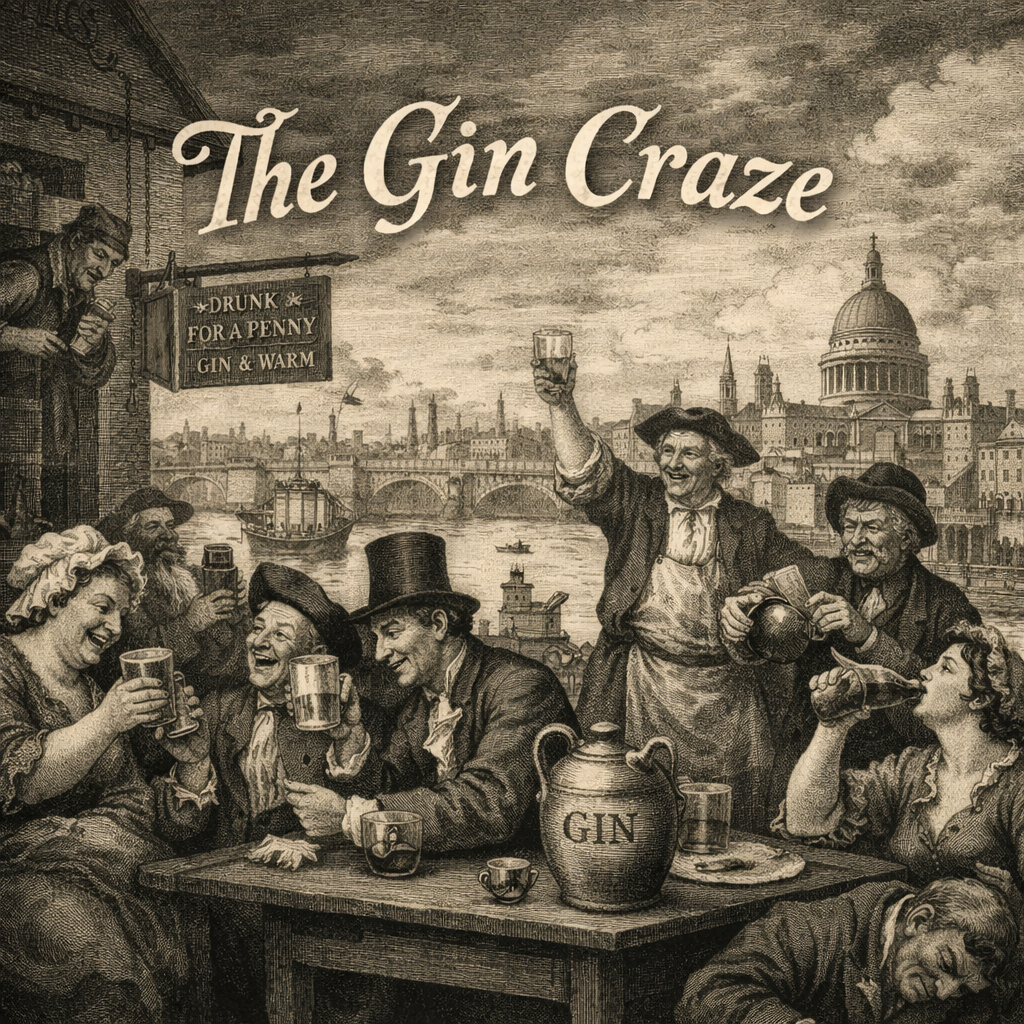
Everything in moderation, right? Well, not if you were a gin-crazed Londoner in the 1700s. Gin was cheap, potent, and literally everywhere you looked. What followed was one of the wildest chapters in England’s drinking history, complete with an invention that suggested sobriety might be more about scent than science.
The Gin Craze, Briefly
Early 18th-century London was crowded, dirty, and short on good drinking water. Gin, by contrast, was plentiful, fast to produce, and remarkably affordable. For long stretches, it was cheaper than bread. It was sold in taverns, homes, and street stalls, often with little oversight. Parliament tried repeatedly to rein it in with a series of Gin Acts, each met with impressive levels of public creativity and noncompliance.
The result was excess, certainly, but also adaptation.
Enter the Gin Token
Somewhere along the way, gin sellers began issuing tokens: small coins made of metal, wood, or bone that could be exchanged for a drink. Think of them as early drink tickets or loyalty cards. In some cases, they were even scented with juniper or citrus oils, creating the hopeful idea that rubbing a token on one’s hands or collar might disguise the smell of gin.
Spoiler alert: It didn’t fool many, but it was English ingenuity at work.
Optimism, Bottled
Gin tokens tell us something important about the era. This wasn’t just reckless drinking; it was a city improvising its way through harsh conditions with whatever tools were available. Tokens allowed discreet transactions, encouraged repeat customers, and occasionally offered plausible deniability. Sobriety, it seemed, was being treated as an aromatic challenge.
Gin Seals Its Reputation in English Culture
The Gin Craze was messy, excessive, and often absurd. But it was also inventive. The gin token stands as a small, metallic reminder that gin has always lived at the intersection of culture, chemistry, and optimism. If Londoners once believed a bit of juniper and a coin could solve the problem, who are we to judge?
Juniper Jeff
🍸🎩
Shock the Monkey (and my apologies to Peter Gabriel)
The real story about one of the wildest gins out there!
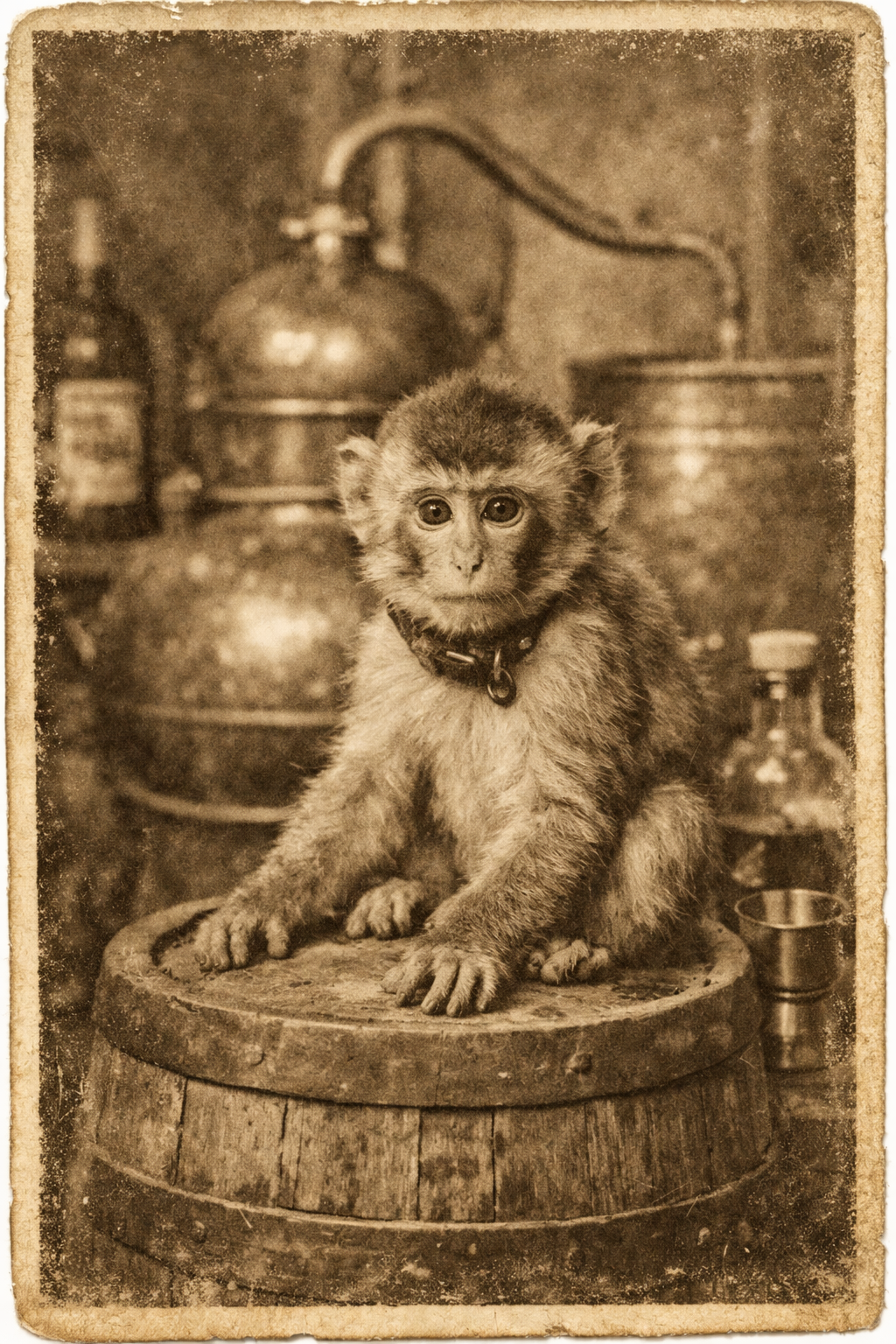
The “Monkey” in Monkey 47 is not a metaphor, or some clever marketing mascot, or a cheeky British nickname. It was very real.
After World War II, Montgomery Collins settled in Germany’s Black Forest and opened a small guesthouse and trout farm. During his earlier postings in India and Southeast Asia, Collins had acquired a pet monkey, which followed him through his travels and eventually to Germany. When he named his establishment Zum Wilden Affen or “The Wild Monkey,” he was not being poetic. He was being literal.
Guests stayed at the Wild Monkey. Guests met the monkey. And guests drank Collins’ homemade gin while doing both.
For his guests, Collins poured a homemade gin built from 47 botanicals. Juniper led the charge, but forest herbs, lingonberries, citrus peel, roots, and spices all had a say. It was layered, eccentric, and utterly unapologetic.
The name stuck, as good names often do, because it was memorable, slightly absurd, and entirely honest. Decades later, when the gin recipe was rediscovered and revived, the monkey remained part of the story, not as branding flair but as historical fact.
In short, Monkey 47 is called Monkey 47 because there was a monkey, there were 47 botanicals, and the man behind it never saw a reason to clean the story up just for company. 🍸
Cheers! -Juniper Jeff
Navy Strength Gin…Honoring the Tradition
Gin is soaked (pun completely intended) in a rich historical tapestry, much of which is tied to the British Royal Navy and the navies it helped inspire. Two of the most enduring bits of gin-soaked lore are the words “proof” and “Navy Strength.” To understand why your martini sometimes packs a punch worthy of a broadside, we need to take a short sail back in time.
British sailors were famously issued a daily rum ration (often mixed with water called “grog”, which I’ll cover in another blog and maybe call it “grog blog”…hmmmm…okay, I’m digressing), but gin was never far from the action. The Admiralty, however, had a problem. Unscrupulous suppliers had a habit of watering down spirits before loading them onto ships. The Navy’s solution was quite ingenious. They doused gunpowder with the spirit in question and tried to light it. If it still went bang, the booze was “proved.” If not, someone was about to have a very bad day.
Over time, this fiery quality control test translated to a measurable standard. Spirits that passed the test landed at about 57 percent alcohol by volume, strong enough that a spilled bottle wouldn’t ruin the ship’s powder stores. This became known as “Navy Strength,” ensuring sailors could trust both their cannons and their cocktails.
So when you spot Navy Strength gin on a shelf today, you’re not just buying a higher-octane pour. You’re raising a glass to sailors who measured alcohol with explosions, not hydrometers. It’s gin with sea legs, cannon smoke in its past, and absolutely no interest in being subtle. 🍸⚓️
Drink up, mateys!
Juniper Jeff
Join the Gin Journey!
Gin, you in?
Welcome to The Gin Gent, a curated destination for gin lovers who appreciate great bars, thoughtful pours, and the stories behind them.
Gin is more than just a spirit. It is a craft, a culture, and increasingly a reason to travel. From classic London dry styles to modern botanical-forward expressions, gin has evolved into one of the most creative and expressive categories in the world of spirits. The Gin Gent exists to celebrate that evolution and to help fellow enthusiasts discover exceptional gin experiences wherever they may be.
This site is built for people who enjoy exploring gin bars, discovering new gins, and planning trips around memorable drinks and places. Whether you are searching for a neighborhood bar with an outstanding martini, a distillery worth visiting, or a book that deepens your appreciation of gin, you will find curated recommendations here. The focus is on quality, character, and authenticity rather than sponsored hype or generic lists.
One of the core features of The Gin Gent is highlighting favorite gin bars. These are places that take gin seriously and offer thoughtful menus, knowledgeable staff, and a welcoming atmosphere. You can explore a growing list of recommended venues on the site, each selected for its genuine passion for gin and the experience it offers.
Happy trails and cheers,
Jeff